
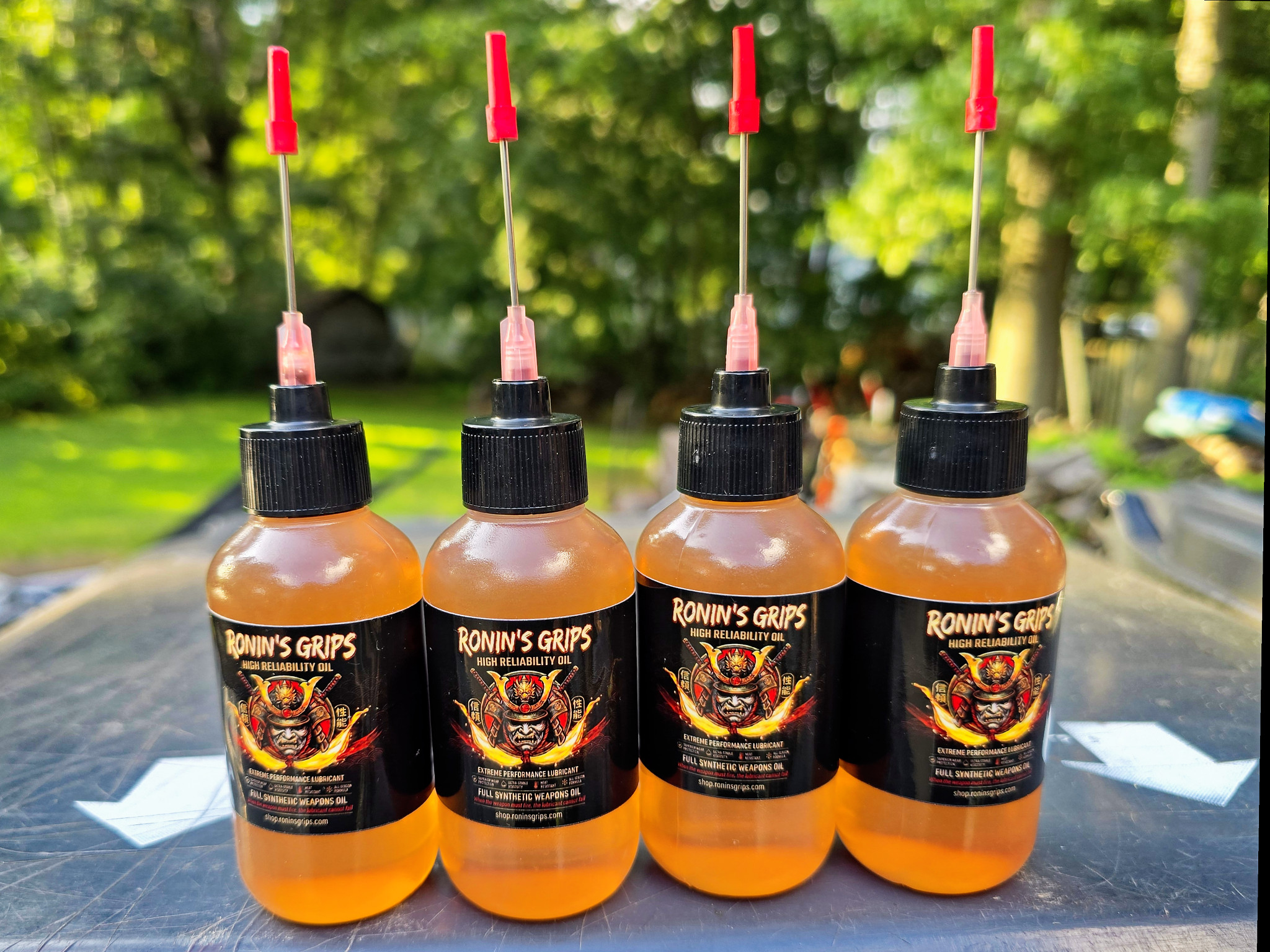
Product Overview This one 2-ounce bottle of High Reliability Oil (HRO) is a specialized lubricant formulated for firearms maintenance. The fluid is engineered to reduce friction, protect metal surfaces, and maintain its viscosity during operation. This bottle has a 1.5″ long dispenser tip that uses a “Luer Lock.” Luer locks are a quick-connect method for needles so you can easily switch them out.
The Ronin’s Grips Mandate: When the weapon must fire, the lubricant cannot fail.
Performance Characteristics The HRO chemical composition addresses the specific environmental and mechanical conditions created by heavy firearm use. It is designed to handle the high heat and increased carbon fouling associated with the following systems:
-
Suppressed weapons
-
Fully automatic firearms
Key Specifications
-
Volume: 2 fluid ounces
-
Compatibility: Standard, suppressed, and fully automatic firearms
-
Primary Functions: Lubrication, heat resistance, and carbon mitigation
Application: Apply directly to friction points, bolt carrier groups, and other moving metal parts according to the technical specifications of your specific firearm. The 2-ounce applicator allows for precise placement of the oil.
References
-
Source: Ronin’s Grips Technical Product Data, August 2026. For more information, visit Ronin’s Grips.

Mark (verified owner) –
I’ve spent considerable time researching firearm lubricants, comparing different manufacturers, oil formulations, viscosity ratings, temperature ranges, and wear-protection additives. Ronin’s Grips stands out for several important reasons.
First, their customer service is outstanding. They respond quickly to technical questions and take the time to provide detailed, knowledgeable answers rather than generic marketing statements. It’s refreshing to deal with a company that values its customers and is willing to explain the science behind its products.
Second, I appreciate their technical specifications and transparency. Ronin’s is willing to share detailed information about its lubricants, including their formulations, operating temperatures, and wear-protection characteristics. They also take the time to explain how their products are designed to perform under different operating conditions.
Third, I appreciate their approach to firearm lubrication. Rather than relying entirely on vague claims about superior performance, Ronin’s has been willing to discuss formulation details, additive chemistry, and the intended operating conditions of its lubricants.
For those of us who take firearm maintenance seriously, this kind of information is extremely valuable. Understanding what is in a lubricant and why those ingredients are used helps us make better-informed decisions.
What impresses me most is the combination of technical knowledge, transparency, and customer service. When I asked detailed questions about HRO PRSC, Ronin’s responded promptly with thoughtful explanations addressing my specific concerns.